Dental Implants vs. Dental Bridges: Which Tooth Replacement Option Is Right for You?

For most people replacing a single missing tooth, a dental implant is the better long-term choice because it does not rely on neighboring teeth, helps preserve the jawbone, and often lasts for decades. A dental bridge is often the better choice when the teeth next to the gap already need crowns, when you want a faster result without surgery, or when health factors or bone loss make implants harder to place. Bridges usually cost less upfront, while implants often cost less over a lifetime because they are less likely to need replacement. The right answer depends on the health of the surrounding teeth, your bone, your budget, and your timeline.
Ufberg Dental, PC is a family, cosmetic, and restorative practice at 664 W. Lancaster Avenue in Berwyn, serving patients across the Main Line. Dr. Aaron Ufberg earned his Doctor of Dental Medicine at the University of Pittsburgh, completed a residency at Allegheny University Hospital, and has trained in implant surgical placement and restoration, while Dr. Douglas Vallinino has practiced restorative dentistry since 1991. Because we place both implants and bridges, we help patients compare them based on what fits their mouth rather than one preferred treatment. This guide walks through the differences.
In This Guide
- Implants vs. Bridges at a Glance: Side-by-side comparison.
- How a Dental Implant Works: A replacement root.
- How a Dental Bridge Works: Using neighboring teeth.
- The Neighboring Teeth: The Deciding Factor: Why they matter most.
- Bone Health and Long-Term Changes: What happens after tooth loss.
- Appearance and Feel: How each looks and feels.
- Front Teeth vs. Back Teeth: Location matters.
- Cost Over Time: Upfront vs. lifetime.
- Timeline and Treatment Experience: Visits and healing.
- Cleaning and Maintenance: Daily care.
- Who Is a Better Candidate for Each?: Matching option to patient.
- Frequently Asked Questions: Quick answers.
Implants vs. Bridges at a Glance
| Factor | Dental Implant | Traditional Dental Bridge |
|---|---|---|
| How it is supported | A post placed in the jawbone | Crowns on the teeth on either side of the gap |
| Effect on neighboring teeth | None, they are left untouched | Neighboring teeth are reshaped for crowns |
| Surgery | Yes, minor oral surgery | No |
| Typical timeline | Several months, including healing | A few weeks |
| Bone preservation | Helps maintain bone at the site | Bone under the missing tooth may shrink over time |
| Typical lifespan | The implant often lasts decades; the crown may need replacement | Often around 10 to 15 years before replacement |
| Cleaning | Brush and floss like a natural tooth | Requires threaders, water flossers, or special brushes under the bridge |
| Upfront cost | Usually higher | Usually lower |
How a Dental Implant Works
A dental implant replaces both the root and the crown of a missing tooth.
The Parts
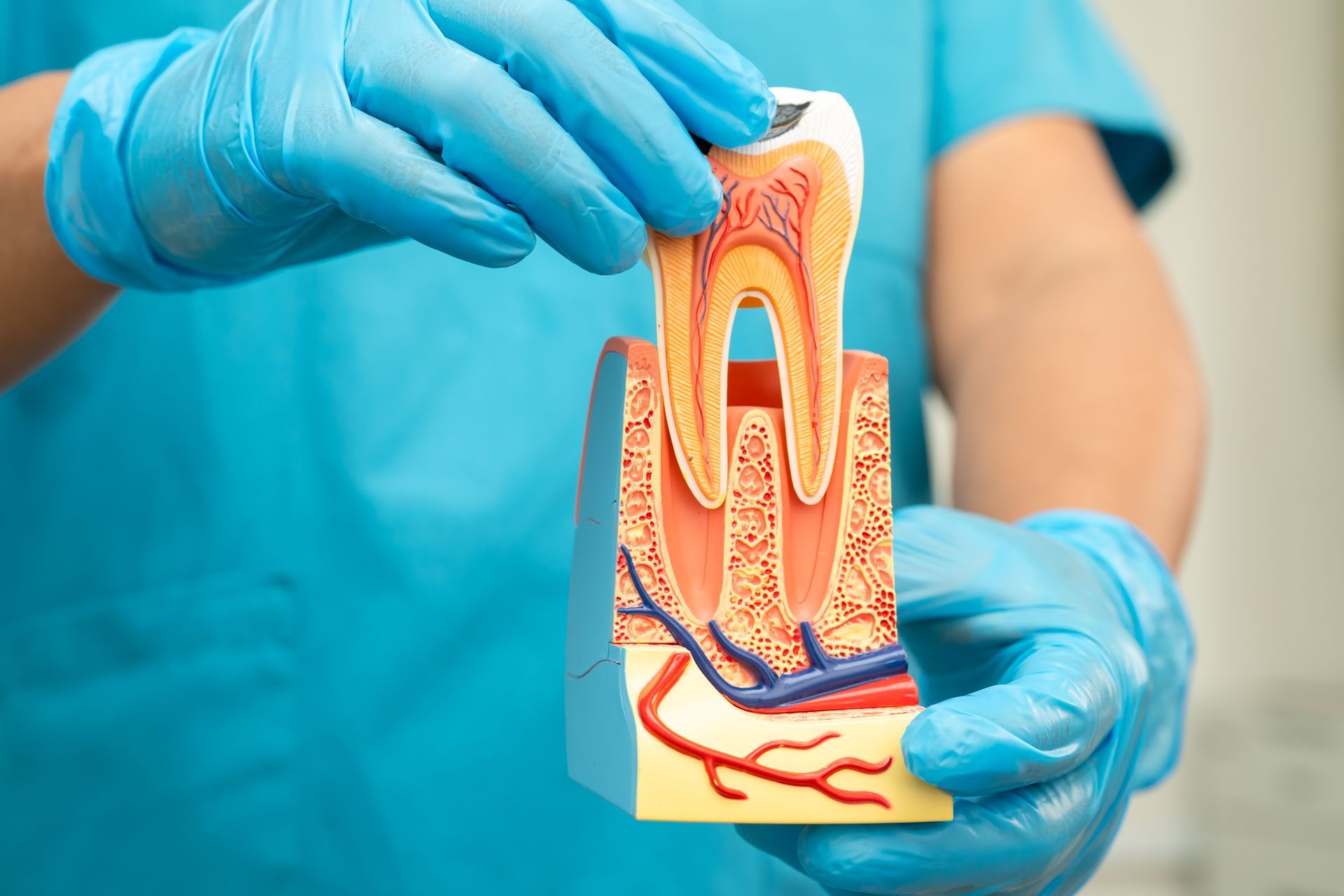
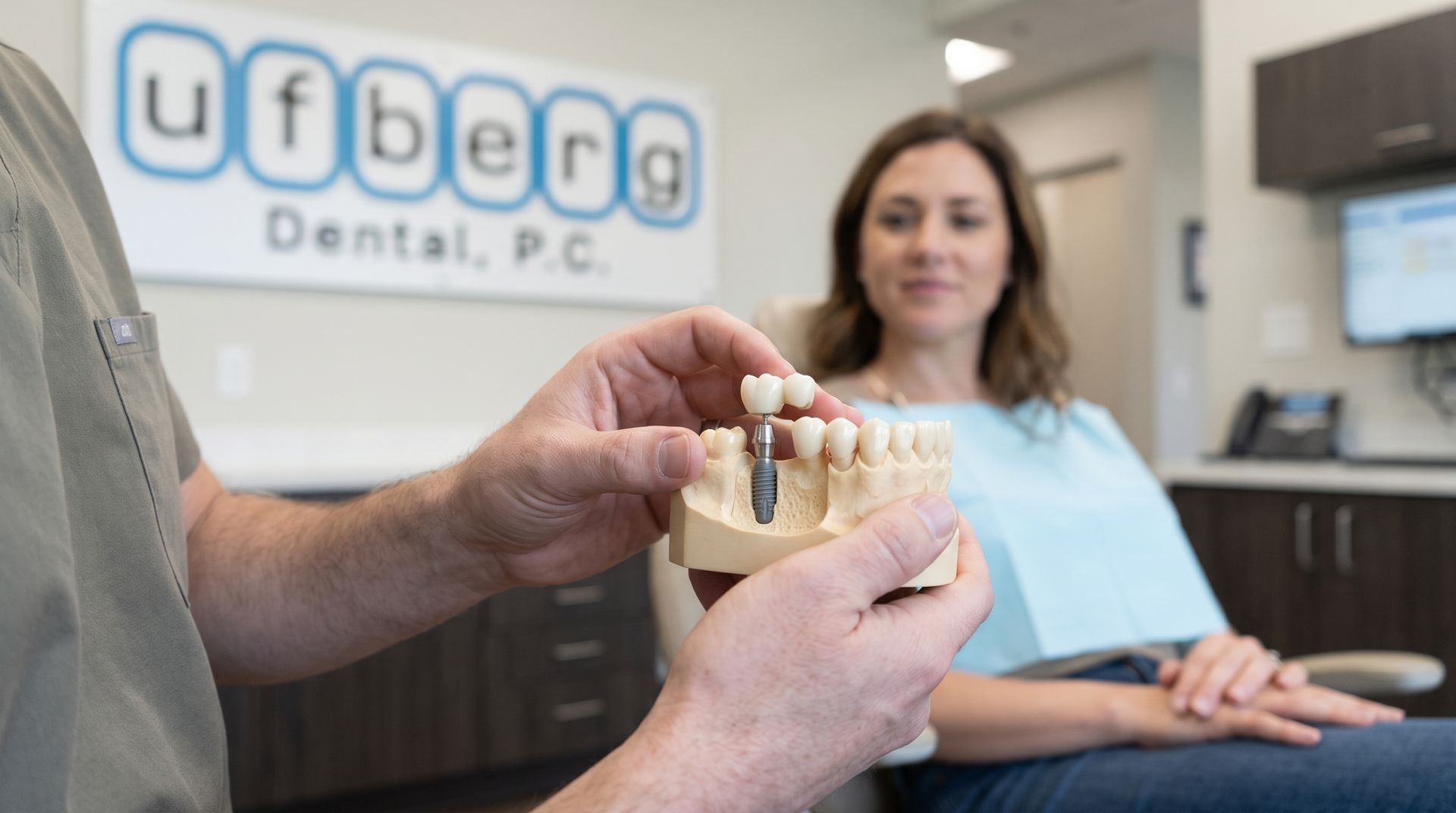
A small titanium post is placed in the jawbone. Over a few months, the bone bonds to the post. An abutment then connects the post to a custom crown that looks and functions like a natural tooth.
Why It Stands Alone
Because the implant is anchored in bone, it does not need support from neighboring teeth. Each implant stands on its own, which is one of its biggest advantages.
Comfort During Treatment
Implant placement is done with local anesthesia, and sedation is available for anxious patients. Our guide on
whether dental implants hurt explains what patients typically feel. Learn more about our approach on our
dental implants page.
How a Dental Bridge Works
A bridge literally bridges the gap left by a missing tooth.
The Traditional Bridge
The teeth on either side of the gap, called abutment teeth, are reshaped and covered with crowns. A false tooth, called a pontic, is attached between those crowns. The whole unit is cemented in place.
Other Bridge Types
A cantilever bridge is supported on one side only. A resin-bonded, or Maryland, bridge attaches to the back of neighboring teeth with small wings and requires little reshaping, though it is usually limited to front teeth. An implant-supported bridge uses implants instead of natural teeth to replace several missing teeth in a row.
Why Bridges Remain Popular
Bridges are a proven, reliable option that has been used for many decades. They do not require surgery and can be completed in a few weeks. Learn more about our
restorative dentistry services.
The Neighboring Teeth: The Deciding Factor
Often the health of the teeth beside the gap decides the question.
When Neighbors Are Healthy
If the teeth next to the gap are healthy and have no large fillings, a bridge requires removing healthy enamel to place crowns on them. That reshaping is permanent. In this situation, an implant usually makes more sense because it leaves those teeth untouched.
When Neighbors Already Need Crowns
If the neighboring teeth already have large fillings, cracks, or old crowns that need replacing, crowning them as part of a bridge can solve two problems at once. Here, a bridge can be a very reasonable choice.
Long-Term Load
Bridge abutment teeth carry the chewing force of three teeth instead of two. Over time, they can develop decay at the crown edges or need root canal treatment. If an abutment tooth fails, the whole bridge usually needs to be redone.
Bone Health and Long-Term Changes
What happens below the gum line matters too.
Bone Loss After Tooth Loss
When a tooth is lost, the jawbone that held its root no longer gets stimulated by chewing and gradually shrinks. A bridge sits on top of the gums and does not stop this process. Over the years, a small gap may form under the pontic.
How Implants Help
An implant transmits chewing forces into the bone, which helps maintain bone volume at the site. It works much like a natural root, which is why bone around a healthy implant tends to stay stable for years. That supports the gums and the appearance of the area over time.
When Bone Is Already Limited
If a tooth has been missing for a long time, there may not be enough bone for an implant without grafting. In those cases, a bridge may be the simpler path, or bone grafting can be done first.
Appearance and Feel
How Each Looks
Both implants and bridges use custom crowns that are color-matched to your natural teeth, so either can look very natural. Over time, the gum and bone shrinkage under a bridge can create a small dark space or a slightly longer-looking false tooth, which matters most in the front of the mouth.
How Each Feels
Implants feel much like a natural tooth, since each one stands on its own. Bridges are fixed in place and feel solid, but some patients notice the connected crowns when flossing or chewing sticky foods.
Front Teeth vs. Back Teeth
Front Teeth
In the front of the mouth, appearance and gum contours are critical. Implants can give excellent results but require careful planning of bone and gum tissue. A resin-bonded bridge is sometimes a conservative option for a single front tooth, especially in younger patients.
Back Teeth
Molars handle the heaviest chewing forces. An implant spreads that load into the bone, while a bridge places it on the neighboring teeth. For back teeth, the condition of those neighbors often decides the choice.
Cost Over Time
Upfront
A bridge typically costs less than an implant upfront, and dental insurance often covers part of a bridge. Implant coverage varies widely by plan. Review your benefits on our insurance page.
Over a Lifetime
Bridges often need replacement after about 10 to 15 years, and each replacement adds cost. If an abutment tooth develops problems, treatment can become more complex. An implant post can last for decades with good care, though the crown on top may eventually need replacement. Over 20 or 30 years, the total cost of an implant is often similar to or lower than a bridge that is replaced more than once.
What Changes the Price
For either option, the final cost depends on materials, the number of teeth involved, and whether extractions, bone grafting, or root canals are needed.
Timeline and Treatment Experience
Bridge Timeline
A traditional bridge usually takes two visits a few weeks apart: one to prepare the teeth and take impressions, and one to place the final bridge. A temporary bridge is worn in between.
Implant Timeline
An implant usually involves placing the post, a healing period of a few months while the bone bonds to it, and then attaching the final crown. Some patients qualify for same-day options, as we explain in our guide to same-day dental implants. Our article on recovery from dental implants covers the healing timeline.
Comfort Options
For patients who feel anxious about either procedure, sedation can help. Our guide on
whether sedation dentistry is safe explains the options and safety measures.
Cleaning and Maintenance
Caring for an Implant
You brush and floss around an implant much like a natural tooth. Implants cannot decay, but the gums around them can become inflamed. Our guides on how to clean dental implants and whether dental implants can get cavities cover daily care.
Caring for a Bridge
Because the pontic is attached to the crowns on either side, you cannot floss between them normally. Floss threaders, water flossers, or small brushes are needed to clean under the bridge and around the abutment teeth, where decay can develop.
Professional Care
Both options need regular cleanings and exams so your dentist can check the gums, bone, and restorations. X-rays every so often help catch problems under a bridge or around an implant before you feel them.
Who Is a Better Candidate for Each?
An Implant Is Often Best If You:
- Have healthy teeth on both sides of the gap.
- Have enough jawbone, or are willing to have a graft.
- Want the longest-lasting option and are planning long term.
- Prefer to clean the area like a natural tooth.
- Are in good general health and do not smoke heavily.
A Bridge Is Often Best If You:
- Have neighboring teeth that already need crowns.
- Prefer to avoid surgery or have health conditions that complicate it.
- Need a faster result.
- Have limited bone and prefer not to graft.
- Have a tighter upfront budget or stronger insurance coverage for bridges.
Signs an Implant May Need Extra Planning
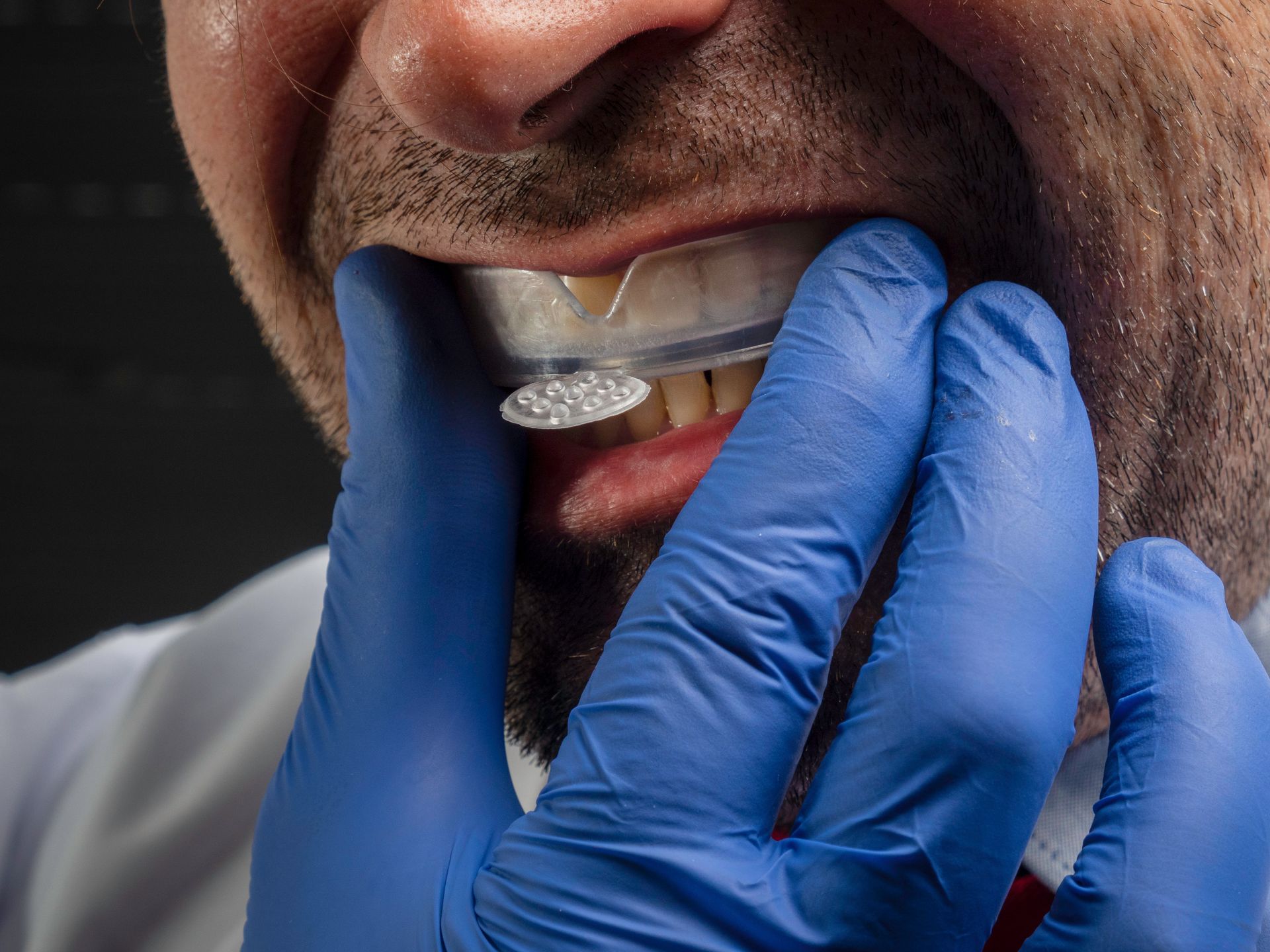
Some factors do not rule out implants but require more preparation, including uncontrolled diabetes, heavy smoking, active gum disease, and teeth grinding. Treating gum disease first, managing health conditions, and wearing a night guard all improve long-term success. Our guide to
dental implant failure signs
explains what to watch for after treatment.
Other Options to Consider
For several missing teeth, an implant-supported bridge can replace multiple teeth with fewer implants. For patients missing most or all teeth, dentures or implant-supported dentures may be more practical. Our article on the
benefits of dentures over implants covers when dentures make sense.
Talk With a Main Line Dentist About Your Options
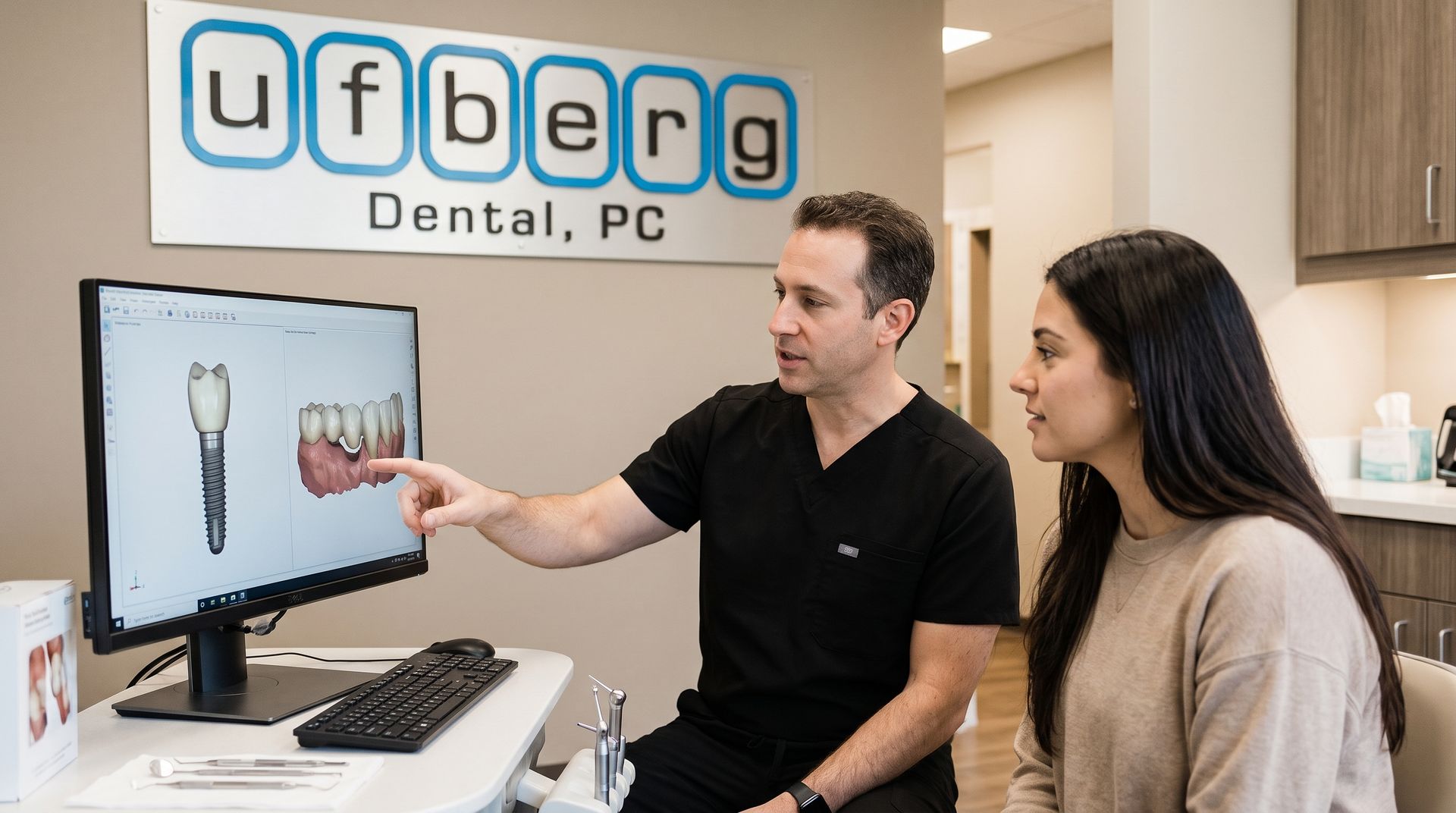
The best way to choose between an implant and a bridge is an exam that looks at the neighboring teeth, your bone, your bite, and your goals. Our team will explain both options, show you how each would work in your mouth, and give you a clear plan and estimate. You can see examples of our work in our smile gallery.
Call Ufberg Dental at (610) 251-2227 to schedule a consultation. We are located at 664 W. Lancaster Avenue in Berwyn and serve patients throughout the Main Line.
Frequently Asked Questions
Is an implant better than a bridge?
For a single missing tooth with healthy neighbors, an implant is often the better long-term choice because it leaves those teeth untouched and helps preserve bone. A bridge can be the better option when neighboring teeth already need crowns or when surgery is not ideal.
Which lasts longer, a dental implant or a bridge?
An implant post often lasts for decades with good care, though the crown may eventually need replacement. Bridges commonly last around 10 to 15 years before they need to be replaced.
Is a bridge cheaper than an implant?
Upfront, a bridge usually costs less, and insurance often covers part of it. Over a lifetime, an implant may cost about the same or less, because bridges often need replacement.
Does getting a bridge damage your teeth?
A traditional bridge requires reshaping the teeth on either side of the gap to hold crowns. If those teeth are healthy, that means removing healthy enamel permanently.
Can I get an implant if I already have a bridge?
Often, yes. If a bridge fails or needs replacement, an implant may be possible, sometimes after bone grafting. Your dentist will evaluate the bone and neighboring teeth.