Sleep Apnea Mouth Guards: How Dentists Treat Snoring & Sleep Issues

Quick answer: A sleep apnea mouth guard, properly called an oral appliance, is a custom device that holds your lower jaw slightly forward while you sleep so the airway stays open. Dentists make, fit, and adjust these appliances, but a dentist does not diagnose sleep apnea. Diagnosis comes from a sleep study ordered by a physician. Oral appliances work best for snoring and for mild to moderate obstructive sleep apnea, and for people who cannot tolerate CPAP. Research consistently finds CPAP reduces apnea events more, while health outcomes often end up comparable, because people actually wear the appliance.
Ufberg Dental, PC in Berwyn provides
sleep apnea and snoring solutions and
TMJ and headache treatment, which matters here more than it sounds: appliance therapy moves the jaw nightly for years, and knowing how to manage the jaw joint is part of doing it well. Dr. Aaron Ufberg, DMD and Dr. Douglas Vallinino, DMD work alongside patients' physicians rather than around them.
In This Guide
- How an oral appliance works
- What a dentist can and cannot do
- Custom appliance vs drugstore mouthpiece
- Oral appliance vs CPAP
- Who is a good candidate
- What to expect the first few weeks
- The process, start to finish
- Side effects worth knowing about
- How it gets paid for
- Talk to us about it
- Sleep apnea appliance FAQs
How an oral appliance works
Obstructive sleep apnea happens when the soft tissue at the back of the throat collapses during sleep and blocks airflow. Snoring is the sound of that tissue vibrating as air squeezes past, which is why snoring and apnea sit on the same spectrum.
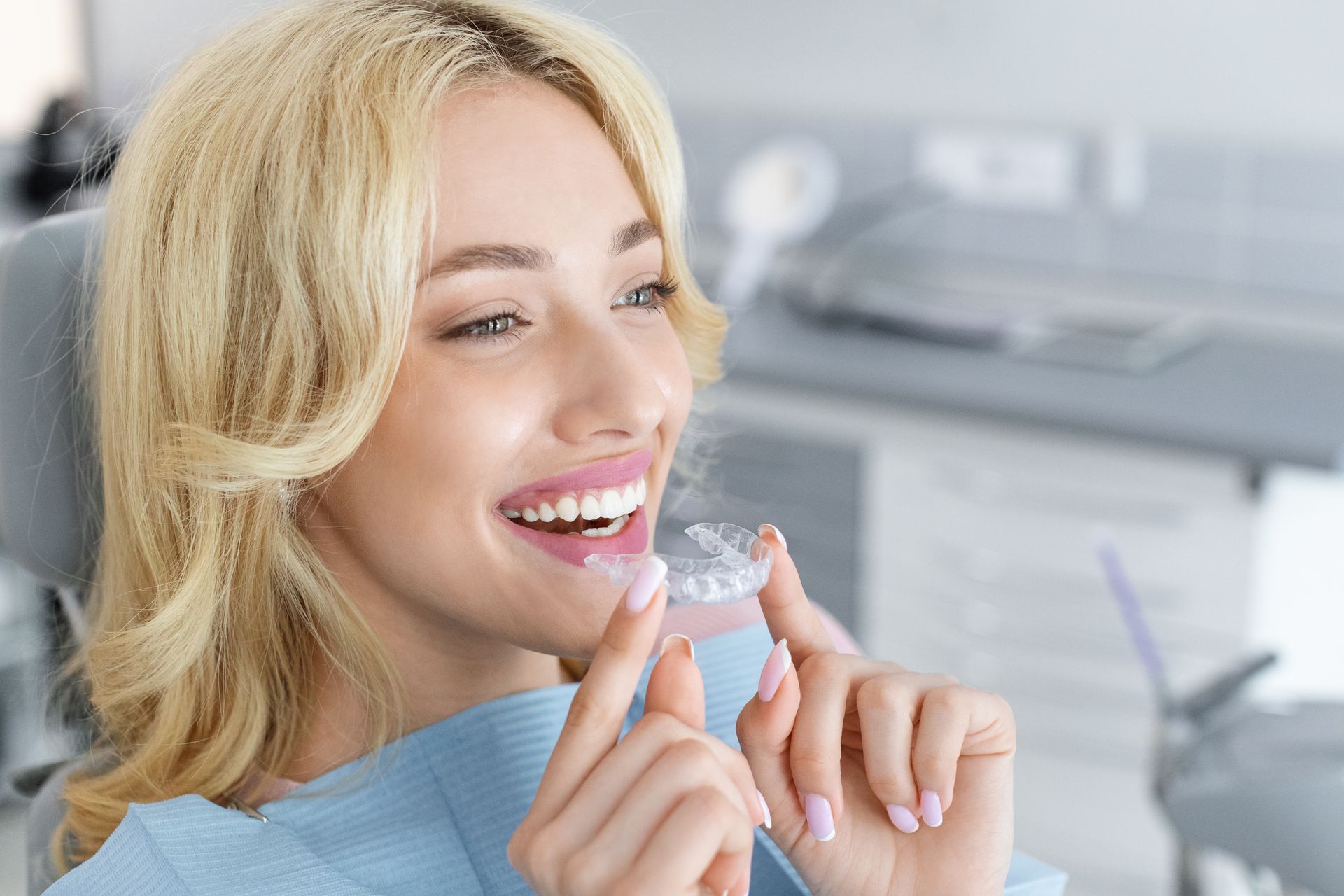
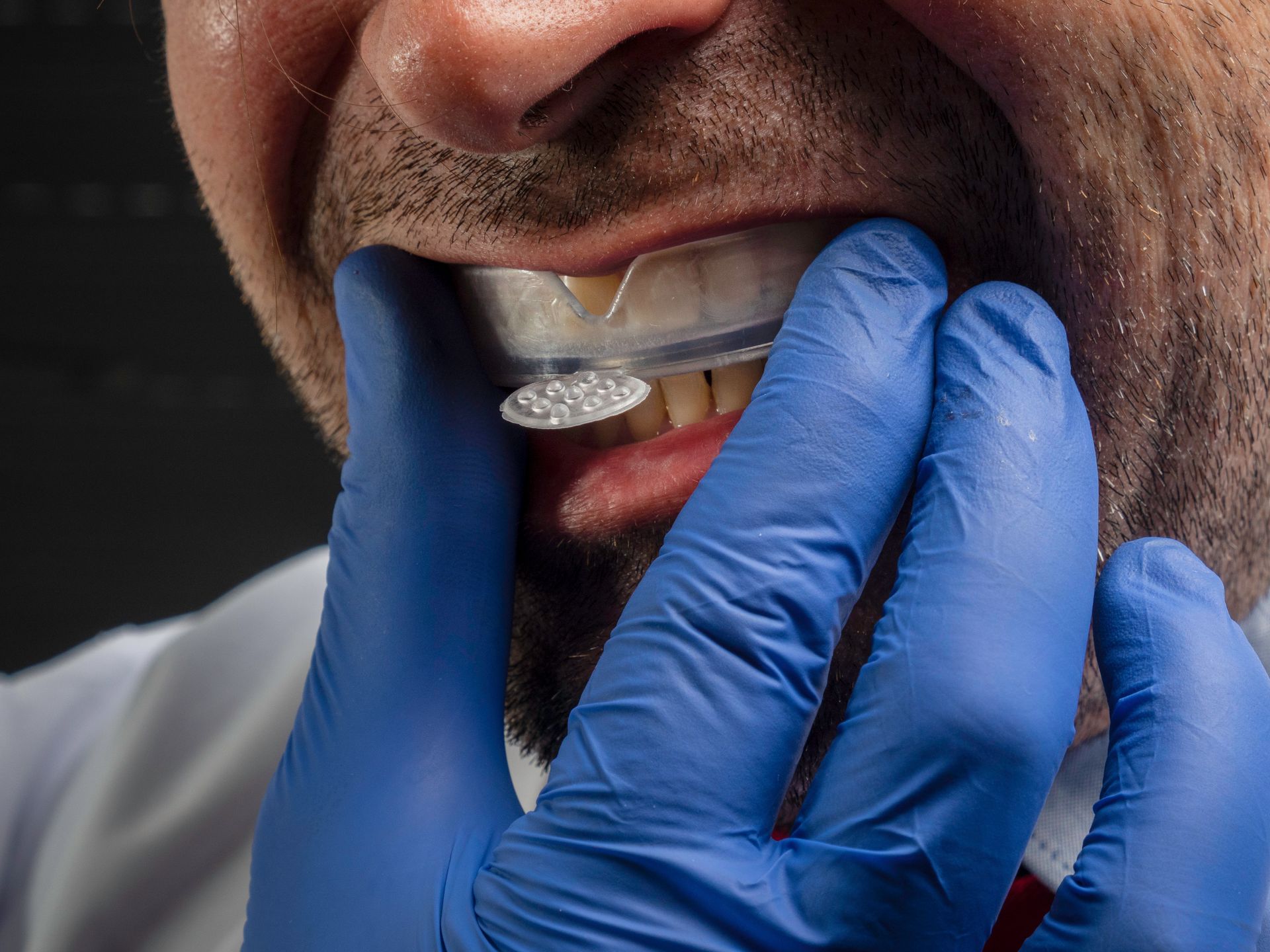
The most common appliance, a mandibular advancement device, fits over your upper and lower teeth like two thin retainers connected to each other. It holds the lower jaw slightly forward, which pulls the tongue and the attached soft tissue forward with it and enlarges the space behind them. More space means less collapse and less vibration.
A second type, the tongue-retaining device, uses gentle suction to hold the tongue forward directly rather than moving the jaw. It is less common and is mostly used for patients whose teeth cannot support a mandibular device, such as those who wear full dentures.
The important design feature in either case is titratability, meaning the device can be advanced in small increments over weeks. That adjustability is the difference between a device that works for you specifically and one that happens to fit.
What a dentist can and cannot do
This is the part most articles blur, and it matters for your care.
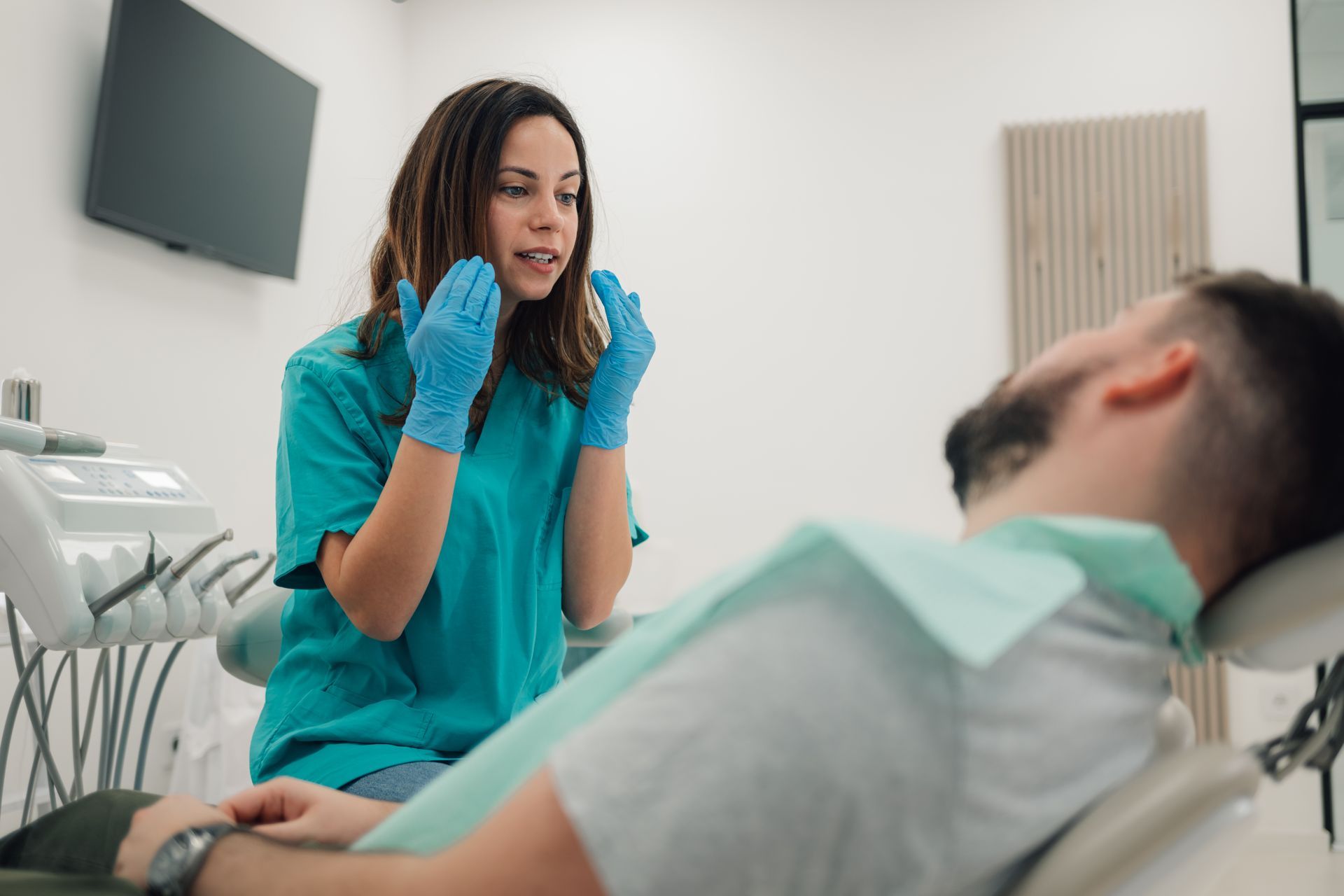
A dentist does not diagnose sleep apnea. Diagnosis requires a sleep study, either an in-lab polysomnogram or a home sleep apnea test, interpreted by a physician. What we can do is recognize the signs during a dental exam, which is more common than people expect: scalloped tongue edges, worn teeth from grinding, a small airway, a large tongue, dry mouth, and a history of morning headaches. When we see that pattern, we refer for testing.
A dentist does prescribe, fabricate, fit, and titrate the appliance. That means taking impressions or digital scans, selecting the device type, adjusting the advancement over follow-up visits based on how you are sleeping, monitoring your bite and jaw joint over the years, and coordinating a follow-up sleep test with the appliance in place to confirm it is actually working.
That last step is the one people skip. An appliance that reduces snoring is not proof that the apnea is controlled, because snoring can quiet down while breathing interruptions continue. Verification is part of the treatment, not an optional extra.
Custom appliance vs drugstore mouthpiece
Boil-and-bite anti-snoring mouthpieces are sold everywhere and cost a fraction of a custom device. The differences are real.
| Drugstore boil-and-bite | Dentist-made custom appliance | |
|---|---|---|
| Fit | Molded to an average arch, bulky, often loosens | Made from scans or impressions of your teeth |
| Adjustability | Fixed position, one setting | Advanced in small increments until it works |
| Jaw and bite monitoring | None | Checked at follow-up visits over years |
| Suitability | Marketed for snoring | Used for snoring and diagnosed OSA |
The practical risk with an over-the-counter device is not just that it may underperform. It is that it can quiet the snoring enough that you stop investigating, while the apnea continues untreated. Untreated obstructive sleep apnea is associated with cardiovascular strain, daytime sleepiness, and impaired concentration, so a device that muffles the symptom while leaving the condition in place is a poor trade.
Oral appliance vs CPAP
CPAP is the standard treatment for obstructive sleep apnea, and for good reason: it is more effective at reducing apnea events, and it works across the full severity range. The case for oral appliances is more interesting than "it is the backup option."
Studies comparing the two consistently find CPAP reduces measured severity more, while overall health outcomes come out broadly similar. The explanation is adherence. A device you wear all night, every night, beats a more powerful therapy you abandon after three weeks, and CPAP tolerance is a genuine problem for a meaningful share of patients.
The other side deserves equal weight. Roughly one in three patients sees little meaningful improvement from an oral appliance, which is exactly why follow-up testing matters. Severe apnea managed with an appliance alone is not appropriate for most patients, and central sleep apnea, which is a signaling problem rather than a blockage, does not respond to these devices at all.
Combination approaches are underused. Some patients use CPAP at home and an appliance when traveling. Others use both together, which can allow a lower CPAP pressure and make the mask easier to tolerate.
Who is a good candidate
Oral appliance therapy tends to fit patients who:
- Have been diagnosed with mild to moderate obstructive sleep apnea through a sleep study.
- Cannot tolerate CPAP, whether from claustrophobia, mask leaks, nasal congestion, or a partner disturbed by the machine.
- Snore significantly without apnea, where the goal is the snoring itself.
- Travel frequently, since an appliance fits in a pocket and needs no power.
- Have enough healthy teeth to anchor the device, typically at least eight to ten per arch.
- Do not have significant jaw joint problems, or have TMJ issues that are being actively managed.
It is less appropriate for severe apnea alone, for central sleep apnea, for patients with advanced gum disease or too few teeth, and for children, who need a different evaluation entirely.
What to expect the first few weeks
Adjusting to an appliance is a process rather than a single night, and knowing the arc keeps people from quitting early.
The first several nights are the hardest. Most patients report awareness of the device, extra saliva, and a jaw that feels tight in the morning. Wearing it for an hour or two while reading before bed, for a few evenings, shortens the adaptation considerably.
By week two the device usually feels normal and your partner is the first to notice the difference. That is also when we start advancing the jaw in small increments, because the starting position is deliberately conservative and is rarely the position that finally works.
Morning routine matters more than people expect. After removing the appliance, a few minutes of gentle jaw exercises, biting on a firm bite tab or simply closing into your normal bite repeatedly, helps the joint and muscles settle back. Patients who do this consistently report far fewer bite complaints months later.
Signals to tell us about right away: sharp joint pain rather than muscle soreness, a tooth that becomes sensitive or sore in one spot, clicking that is new, or a bite that does not return to normal within about half an hour.
The process, start to finish
- Screening or referral. Either your physician sends you to us with a diagnosis, or we notice signs at a dental visit and refer you for testing.
- Sleep study. A home test or in-lab study establishes whether you have apnea and how severe it is. This step is not skippable.
- Dental evaluation. We examine your teeth, gums, bite, jaw joint, and range of motion to confirm the appliance is appropriate and choose the right design.
- Records. Digital scans or impressions plus a bite registration that captures the starting jaw position.
- Delivery and instruction. Two to three weeks later, we fit the appliance, check comfort, and teach you how to insert, remove, and clean it.
- Titration. Over the following weeks we advance the jaw position in small steps, guided by your sleep quality, your partner's report, and your comfort.
- Verification. A follow-up sleep test with the appliance in place confirms the apnea is actually controlled.
- Ongoing monitoring. Annual checks on fit, bite, and jaw joint, with the appliance replaced as it wears.
Side effects worth knowing about
Most are mild and settle within a few weeks. A few are worth understanding before you start.
Early and temporary effects include:
- Morning jaw soreness, usually muscle rather than joint, which eases as you adapt.
- Tooth tenderness, most noticeable in the first week and after each advancement.
- Excess saliva or dry mouth, depending on whether you tend to keep your lips sealed.
- A bite that feels off for the first 20 to 30 minutes after removal, which morning exercises shorten.
- Awareness of the device at first, which nearly always fades within two weeks.
Long-term and worth monitoring: systematic reviews of oral appliance therapy have documented gradual tooth movement and bite changes over years of nightly use, since the device applies light continuous force to the teeth. The changes are usually small and often acceptable given the benefit, but they are the reason follow-up visits are part of treatment rather than optional. We check for them and can adjust the plan if they progress.
Jaw joint symptoms. Advancing the jaw nightly can provoke TMJ discomfort in susceptible patients. This is where our TMJ and headache treatment experience is directly relevant, since managing the joint is often what makes long-term appliance wear possible.
If you also grind your teeth, tell us. Bruxism and apnea frequently occur together, and the appliance design should account for both rather than treating one and worsening the other.
How it gets paid for
Oral appliance therapy for diagnosed sleep apnea is generally a medical benefit rather than a dental one, which surprises most patients. That means it is typically billed to your medical insurance, usually requires documentation of the sleep study diagnosis, and often requires evidence that CPAP was tried or is not appropriate.
Practical implications: your dental plan's annual maximum is usually not the relevant number, prior authorization is common, and the paperwork trail from your physician matters. An appliance bought for snoring alone, with no apnea diagnosis, is generally not covered by either.
We can walk through what your specific plan requires. Our
insurance page covers how we handle benefits, and the answer is worth confirming before treatment rather than after.
Talk to us about it
If you snore, wake up unrefreshed, or have been handed a CPAP machine you cannot stand, an oral appliance may be a realistic path. If you have never been tested, that is the first step, and we can point you toward it.
Call Ufberg Dental, PC at 610-251-2227 or contact us. We are at 664 W Lancaster Ave in Berwyn, serving patients across the Main Line. You can read more on our sleep apnea and snoring solutions page or meet our team.
This article is general information and not a substitute for evaluation by a physician or dentist. Sleep apnea is a medical condition that should be diagnosed through a sleep study.
Sleep apnea appliance FAQs
Can a dentist diagnose sleep apnea?
No. A dentist can recognize the signs and refer you for testing, but diagnosis requires a sleep study interpreted by a physician. Once you have a diagnosis, a dentist is the provider who makes and manages the oral appliance.
Do sleep apnea mouth guards actually work?
For many patients, yes, particularly with mild to moderate obstructive sleep apnea. Research shows CPAP reduces apnea events more, while real-world outcomes are often comparable because people wear appliances more consistently. About a third of patients see little improvement, which is why a follow-up sleep test with the device in place is part of proper treatment.
Will an over-the-counter anti-snoring mouthpiece work as well?
Generally not. Drugstore devices are not adjustable, fit an average arch rather than your teeth, and are not monitored for effects on your bite and jaw joint. Their bigger risk is reducing the snoring enough that an underlying apnea goes untested.
Does a sleep apnea appliance move your teeth?
It can, slowly, over years of nightly wear. Studies of oral appliance therapy have documented gradual bite changes, usually small. That is the reason for regular follow-up, where we monitor tooth position and jaw function and adjust the approach if needed.
Is an oral appliance covered by dental or medical insurance?
Medical, in most cases, since it treats a diagnosed medical condition. Coverage usually requires the sleep study documentation and often evidence that CPAP was tried or ruled out. Prior authorization is common, so confirm the requirements before treatment begins.