Dental Emergency vs Urgent Care: Where Should You Go?

Quick answer: For anything involving a tooth, call a dentist first. Urgent care and the emergency room can manage pain, prescribe antibiotics, and handle injuries beyond the teeth, but neither can perform dental treatment, which means the problem that sent you there is still waiting when you leave. The exception is a short list of genuine medical emergencies: trouble breathing or swallowing, swelling spreading into your face or neck, uncontrolled bleeding, or a suspected broken jaw. Those go to the ER or 911, no matter how the problem started.
Ufberg Dental, PC has practiced on the Main Line for years, and Dr. Aaron Ufberg, DMD and Dr. Douglas Vallinino, DMD handle same-day emergencies at our Berwyn office. We wrote this to answer the question directly, because people who are in pain at 9 p.m. do not need a sales pitch, they need to know where to drive.
If you are in pain right now, call
610-251-2227.
In This Guide
The fast answer, by symptom
| What you have | Where to go | Why |
|---|---|---|
| Severe toothache, no swelling | Dentist, same day | Only a dentist can treat the source, whether that is decay, a crack, or an infected nerve |
| Knocked-out permanent tooth | Dentist, immediately | Re-implantation is time-sensitive and neither urgent care nor the ER performs it |
| Broken or cracked tooth | Dentist, same day if painful | Needs bonding, a crown, or a root canal, none of which happen at urgent care |
| Swollen gum or face, no breathing trouble | Dentist, same day | An abscess needs drainage and source treatment, not just a prescription |
| Swelling spreading to eye, neck, or floor of mouth | ER now | Airway risk, which is a medical emergency |
| Trouble breathing or swallowing | 911 | Airway risk |
| Bleeding that will not stop after 20 minutes of pressure | ER | Bleeding control is medical care |
| Jaw injury after a fall or accident | ER first, dentist after | A fracture or head injury is ruled out before dental treatment |
| Lost filling or crown, no pain | Dentist, next business day | Uncomfortable, not urgent |
Go to the ER or call 911 if
These are the situations where the tooth is no longer the main problem:
- You have trouble breathing or swallowing. Dental infections can spread into the floor of the mouth and the neck, and airway compromise is life-threatening.
- Swelling is spreading into your face, under your jaw, toward your eye, or down your neck, especially if it is getting visibly worse over hours.
- You have a high fever with facial swelling, which suggests infection spreading beyond the tooth.
- Bleeding will not stop after 20 minutes of firm continuous pressure with gauze.
- You had significant facial trauma, such as a fall, car accident, or sports impact, where a jaw fracture, broken facial bone, or concussion is possible.
- You feel confused, faint, or very unwell alongside a dental problem.
In those cases go to the emergency department first and see a dentist afterward for the tooth itself. Treating the medical risk comes first, but it does not resolve the dental cause.
What urgent care can and cannot do
Urgent care centers are set up for non-life-threatening medical problems. They are staffed and equipped for medicine, not dentistry, and that distinction explains almost everything about when they help.
Urgent care can prescribe antibiotics for an infection, provide pain medication, stitch a cut lip or tongue, and check an injury that involves more than teeth.
Urgent care cannot take dental X-rays in most locations, perform a filling or root canal, extract a tooth, re-implant a knocked-out tooth, re-cement a crown, or drain a dental abscess through the tooth.
The result for most people is a visit that costs money and time and ends with a prescription plus instructions to see a dentist. If your dentist has any availability, calling them first usually saves you that step. Our
emergency dentist page for Berwyn covers what we handle in the chair, and our
dental emergencies page explains how our emergency scheduling works.
Why antibiotics alone do not fix it
This is the part that catches people in a loop, and it is worth understanding before you decide where to go.
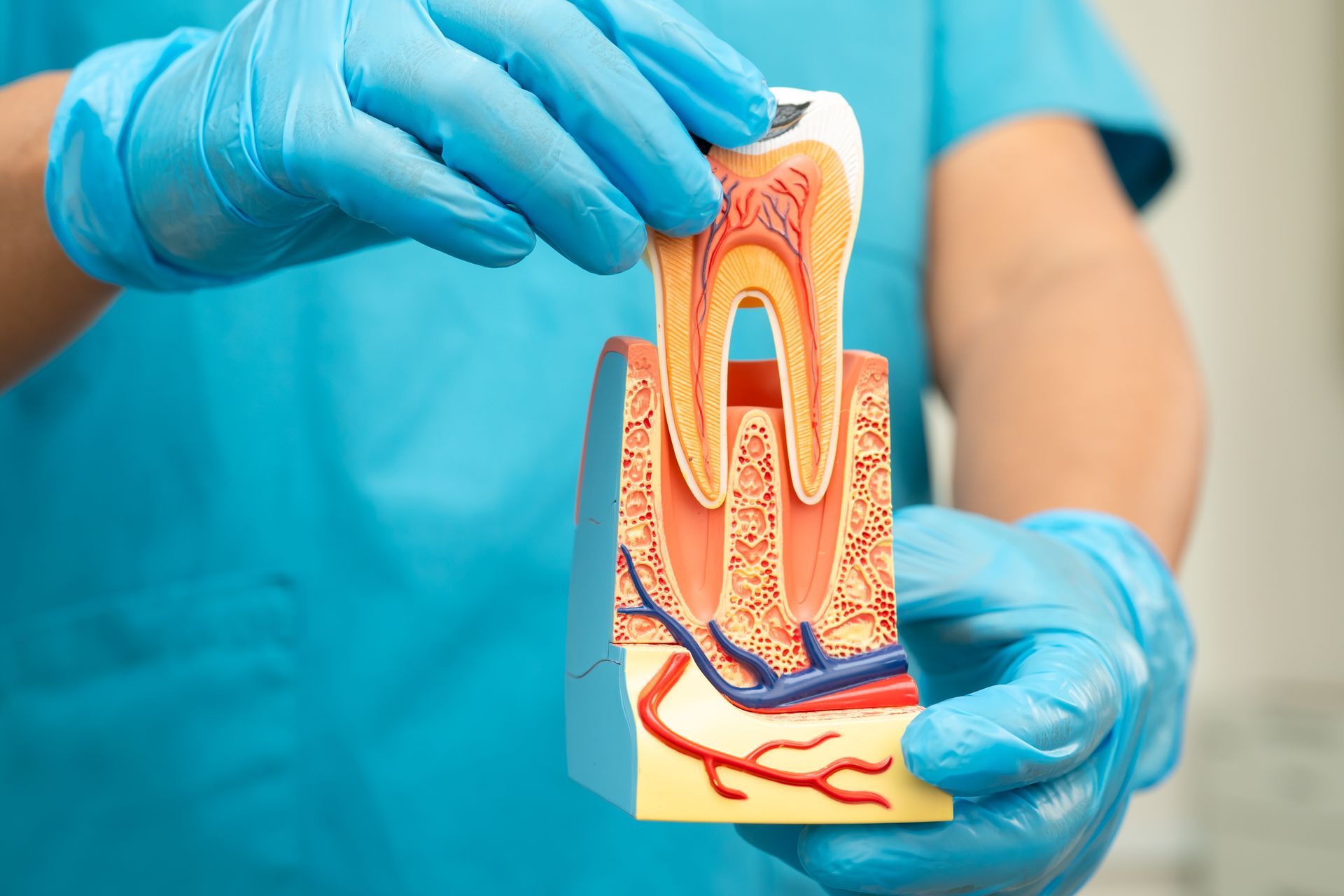
A dental abscess is an infection with a physical source: a dead or dying nerve inside the tooth, or a deep periodontal pocket. Antibiotics reduce the bacterial load and can bring swelling down, which makes you feel better within a day or two. What they do not do is remove the source, because there is no blood supply left inside a dead tooth for the medication to reach.
So the pattern repeats. The pain fades, the prescription runs out, and weeks later the swelling returns, usually worse. The definitive treatment is drainage and addressing the tooth, through a root canal or an extraction. That is dental treatment, and it happens in a dental office.
If you have already been to urgent care or the ER and were given antibiotics, that was reasonable care for the moment. Book the dental appointment anyway, and do it while you feel fine rather than waiting for the next flare.
What counts as a dental emergency
Same-day dental care is appropriate for:
- A knocked-out permanent tooth, which is the most time-sensitive situation in dentistry.
- Severe or persistent toothache, particularly pain that wakes you up, does not respond to over-the-counter medication, or throbs continuously.
- Swelling of the gum, cheek, or jaw without airway symptoms.
- A broken tooth with pain or a sharp edge, or any fracture that exposes the inner layers.
- A loose or displaced permanent tooth after an impact.
- Uncontrolled bleeding after an extraction that has not stopped with pressure.
- A dental abscess, meaning a pimple-like bump on the gum, a bad taste, or a foul odor near a painful tooth.
- Pain with a fever, which needs prompt evaluation even without visible swelling.
Pain that keeps you from sleeping is a legitimate emergency even without visible swelling. You do not need to justify the call.
A knocked-out tooth is a clock
If a permanent tooth comes out whole, what you do in the next half hour matters more than anything a provider does later.
Pick the tooth up by the crown, the chewing part, and never by the root. If it is dirty, rinse it briefly with milk or saline, or water if that is all you have, without scrubbing it or removing any attached tissue. Then put it back in the socket if you can, and hold it there by biting gently on gauze.
If reinserting it is not possible, store it in milk. Saliva works, meaning holding it inside the cheek for an older child or adult, and plain water is the worst option because it damages the root cells. Then get to a dentist immediately.
The window that matters is roughly the first 30 to 60 minutes. This is also the clearest case of why the destination matters: an emergency room will make you comfortable and refer you out, and by the time you are seen the window may have closed. A baby tooth is different, and is not re-implanted, though the child should still be evaluated.
What can wait until morning
Not everything needs a call at midnight. These usually keep:
A lost filling or crown with no pain can wait for a regular appointment. Cover the area with dental wax or sugar-free gum if it is sharp, keep it clean, and avoid chewing on that side. A small chip with no pain and no sharp edge is the same category.
Mild sensitivity to hot or cold that fades within seconds is not an emergency, though it is worth mentioning at your next visit because it can be the first sign of a problem that is easier to treat early. A dull ache that comes and goes should be seen within a week rather than tonight.
Food stuck between teeth, mild gum irritation, and a sore spot from a new appliance are all routine. Floss carefully, rinse with warm saltwater, and call during business hours.
What to do while you wait
Between the phone call and the appointment, a few things genuinely help and a few common ideas make it worse.
Helpful: rinse with warm saltwater, a half teaspoon in a cup of warm water, several times a day. Use a cold compress on the outside of the cheek in 20-minute intervals for swelling from an injury. Take over-the-counter pain relief as directed on the label, and sleep with your head elevated, since lying flat increases pressure and throbbing.
Not helpful, and sometimes harmful: placing an aspirin directly against the gum, which burns the tissue rather than relieving the tooth. Applying heat to a swollen area, which can encourage an infection to spread. Poking at the area with anything sharp. Using a leftover antibiotic from a previous prescription, which underdoses the infection and complicates the treatment you actually need.
If you had an extraction recently and bleeding restarts, bite firmly on damp gauze for 20 minutes without checking it every two minutes, since lifting the clot restarts the bleeding. Avoid rinsing hard, spitting, and straws for the first day.
How to get seen fast
Most dental offices hold slots for emergencies, and how you call affects how quickly you land in one.
Lead with the specifics: what happened, when it started, whether there is swelling, whether you have a fever, and how the pain scores from 1 to 10. Those four details let the front desk triage you accurately instead of offering the next open routine appointment.
Say plainly if you cannot sleep or cannot eat. Mention any medical conditions and medications, particularly blood thinners, diabetes, or a history of heart valve problems, since those change how we plan treatment. And if you are calling after hours, leave a callback number and stay reachable.
If dental anxiety is part of why you have been putting off a problem that is now an emergency, say that too. We offer
sedation dentistry and have written about
sedation for dental anxiety, and knowing in advance lets us plan the visit around it.
Call us
If you are on the Main Line and dealing with something dental right now, call us before you sit in a waiting room. We will tell you over the phone whether this is a come-in-now situation, a tomorrow-morning situation, or one where you should be heading to the ER instead.
Ufberg Dental, PC, 664 W Lancaster Ave, Berwyn, PA. Call
610-251-2227 or
contact us. You can also review our
insurance information or
meet our team beforehand.
Dental emergency FAQs
Can urgent care pull a tooth?
No. Urgent care centers do not perform extractions or other dental procedures. They can prescribe antibiotics and pain medication and treat injuries to soft tissue, but the tooth itself needs a dentist.
Should I go to the ER for a severe toothache?
Only if you also have swelling that is spreading, trouble breathing or swallowing, a high fever, or facial trauma. For pain alone, the ER will typically provide medication and refer you to a dentist, which means a long wait and a bill without treatment.
What if my dentist is closed?
Call anyway. Most practices have an after-hours message with instructions or a callback number. If the situation involves airway symptoms, spreading swelling, or uncontrolled bleeding, go to the emergency room without waiting for a call back.
Is a dental abscess dangerous?
It can be. Most abscesses are treated routinely, but infection that spreads into the floor of the mouth or the neck is a medical emergency because it can compromise the airway. Swelling that is growing, difficulty swallowing, or fever with swelling all mean seek care immediately.
Will my medical insurance cover an ER visit for a tooth?
Often partially, though what you receive there is medical care rather than dental treatment, so you generally pay twice: once for the ER visit and again for the dental work that still needs doing. Calling a dentist first is usually both faster and less expensive.