
Signs You Might Need a Root Canal

The most common signs you might need a root canal are a persistent or throbbing toothache, sensitivity to hot or cold that lingers after the food or drink is gone, pain when biting down, swollen or tender gums, a small pimple-like bump on the gum, and a tooth that is darkening compared to its neighbors. These point to infection or inflammation in the pulp, the living tissue inside the tooth. Only a dentist can confirm it, but if you notice any of these, it is worth getting checked promptly, because a root canal actually relieves the pain rather than causing it.
At Ufberg Dental in Berwyn, we treat these problems for patients across the Main Line, and we do it with comfort in mind, including sedation options for anyone who feels anxious. This guide walks through each warning sign, what it means, and a few things about root canals that surprise most people.
In This Guide
- What a Root Canal Treats: The problem behind it.
- The Signs You Might Need One: The warning signs in detail.
- Not Every Toothache Is a Root Canal: When it's something else.
- What If the Pain Just Goes Away?: Why that's not good news.
- What Happens If You Ignore It: The real risks.
- Does a Root Canal Hurt?: The truth about the procedure.
- Root Canal vs Extraction: Save it or pull it.
- How a Dentist Confirms It: Getting a real diagnosis.
- Frequently Asked Questions: Quick answers.

What a Root Canal Treats
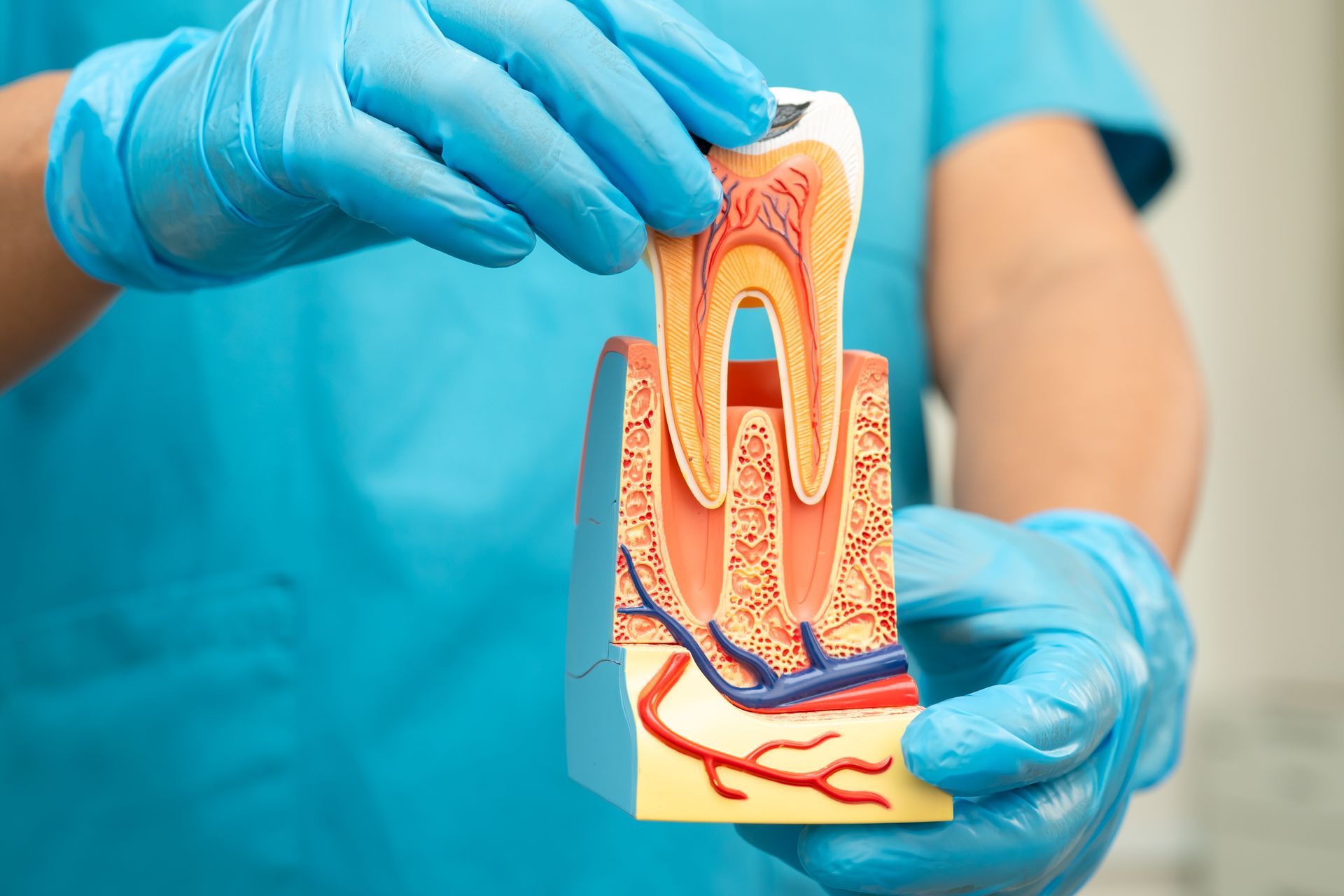
A root canal treats a problem inside the tooth, not on its surface. Beneath the hard enamel and dentin sits the pulp, the soft core that holds the tooth's nerve and blood supply. When that pulp becomes infected or badly inflamed, it cannot heal on its own, and it causes the pain and swelling most people associate with a serious tooth problem.
The pulp usually gets into trouble for one of a few reasons: deep decay that reaches the nerve, a crack or chip that lets bacteria in, an injury to the tooth, or repeated dental work on a tooth with a large filling. During a root canal, the dentist removes the damaged pulp, cleans and disinfects the inside of the tooth, and seals it, which stops the infection while keeping your natural tooth in place.
The Signs You Might Need One
Pulp problems announce themselves in fairly recognizable ways. Any one of these is worth attention, and several together make an evaluation urgent.
Persistent or Throbbing Tooth Pain
The classic sign is a toothache that will not quit. It might be a deep, constant ache or a sharp throb, it often does not respond well to over-the-counter pain relievers, and it can flare up seemingly on its own, sometimes waking you at night. Pain that lingers for more than a day or two, rather than a fleeting twinge, is the tooth telling you something inside needs looking at.
Lingering Sensitivity to Hot and Cold
Brief sensitivity to a cold drink is normal and fades in a second or two. What signals a pulp problem is sensitivity that lingers, where the ache hangs around long after you have swallowed the ice water or finished the hot coffee. That lingering response, especially to heat, suggests the nerve inside the tooth is inflamed or damaged rather than just briefly stimulated.
Pain When Biting or Chewing
If one specific tooth hurts every time you bite down or put pressure on it, that is a meaningful clue. Pain on chewing often comes from inflammation or infection around the root of the tooth, and it tends to be reproducible, meaning the same tooth complains in the same way each time. A tooth that has become tender to pressure or feels different when you chew deserves a look.
Swollen Gums or a Pimple on the Gum
Healthy gums do not swell without a reason. Puffiness or tenderness localized around one tooth, rather than across the whole mouth, can point to infection at that tooth's root. A particularly telling version is a small pimple-like bump on the gum near the tooth, sometimes called a gum boil, which is a sign of a dental abscess draining pus. That bump may come and go, and it should never be ignored.
A Darkening or Discolored Tooth
When a single tooth turns gray or noticeably darker than the ones around it, the pulp inside may be dying or already dead. This kind of discoloration comes from within the tooth, which is why whitening cannot fix it, and it often follows an injury or deep decay. A tooth changing color on its own, especially alongside any pain or sensitivity, is a strong reason to have it evaluated.
A Bad Taste or Persistent Bad Breath
Sometimes the clue is a taste or smell. A lingering bad taste or foul odor coming from one area, one that brushing and mouthwash do not resolve, can be pus draining from an infected tooth. It frequently shows up alongside pain or swelling, but occasionally it is the most noticeable sign that an infection is brewing.
| Sign | What It Feels Like | Why It Happens |
|---|---|---|
| Persistent pain | Deep ache or throb that won't quit | Inflamed or infected pulp |
| Lingering hot/cold sensitivity | Ache that stays after the stimulus is gone | Damaged nerve inside the tooth |
| Pain on biting | One tooth hurts with pressure | Infection around the root |
| Gum swelling or a bump | Tenderness or a pimple on the gum | An abscess draining infection |
Not Every Toothache Is a Root Canal
It is worth saying plainly: not every ache means you need a root canal. A cavity, a lost filling, gum irritation, a sinus infection pressing on upper teeth, or ordinary sensitivity can all cause tooth discomfort without the pulp being infected. Many of those are simpler to treat.
The difference is usually in the character of the pain. Brief, minor, or occasional discomfort is often something less serious, while pain that is severe, persistent, lingering, or paired with swelling and discoloration points toward a pulp problem. You do not have to diagnose it yourself, and you should not try to, but knowing the difference helps you understand why a dentist examines and tests the tooth rather than assuming the worst.
What If the Pain Just Goes Away?
Here is the part that catches people off guard. If you have had a bad toothache and it suddenly disappears, that is not necessarily good news. In some cases the pain stops because the nerve inside the tooth has died, but the infection does not go away with it. It can keep spreading quietly in the bone while you feel nothing.
This is exactly why people sometimes delay care, assume the tooth healed itself, and then face a much larger problem weeks later. A tooth that hurt badly and then went quiet still needs to be checked. Silence from a tooth that was recently in pain is a reason to call your dentist, not a reason to relax.
What Happens If You Ignore It
An infected pulp does not resolve on its own, and left untreated it tends to get worse rather than better. The infection can develop into an abscess, a pocket of pus at the root, which is both painful and capable of spreading into the surrounding bone and tissue.
From there the consequences grow. You may develop facial swelling, swollen lymph nodes, or even a fever as the infection advances, and the tooth itself can be lost entirely, turning a treatable problem into an extraction. In serious cases the infection can spread beyond the mouth, which is why a dental abscess is treated as something to address promptly rather than wait out. Catching a pulp problem early keeps treatment simpler and gives the best chance of saving the tooth.
Does a Root Canal Hurt?
Root canals have an unfair reputation. The truth is close to the opposite of the myth: the procedure relieves the intense pain of an infected tooth rather than creating it. The real pain is the infection, and the root canal is what makes it stop.
Modern root canal treatment is done under local anesthesia, so the tooth is numb throughout, and most patients compare the experience to getting a filling. Afterward, some tenderness for a few days is normal and manageable with over-the-counter pain relief. For anyone whose worry about the procedure has kept them from getting help, our
sedation dentistry options make it possible to have the treatment comfortably and calmly.
Root Canal vs Extraction
When a tooth's pulp is infected, the two ways forward are to save the tooth with a root canal or to remove it. Between the two, keeping your natural tooth is almost always the better choice when it is possible.
A root canal lets you keep the tooth's root and structure, which preserves your bite and avoids the gap that an extraction leaves. Pulling the tooth may seem simpler, but a missing tooth then needs replacing with an implant or bridge to prevent the neighboring teeth from shifting and the jawbone from shrinking, which is more involved and often more expensive over time. Extraction is the right call in some cases, such as a tooth too damaged to save, but for a restorable tooth, a root canal is usually the more conservative and cost-effective path. Our
restorative dentistry team can tell you which fits your situation.
How a Dentist Confirms It
You cannot confirm a root canal is needed from symptoms alone, which is why the dentist examines and tests the tooth. This usually includes an X-ray to see the root and surrounding bone, along with simple tests of how the tooth responds to temperature and pressure, to pinpoint which tooth is involved and whether the pulp is truly affected.
This step matters because it separates a tooth that needs a root canal from one that needs a filling, a crown, or nothing at all. It also catches problems that are not causing symptoms yet. If you are in significant pain or have swelling, that is worth treating as urgent, and our
dental emergency care is here for exactly those situations.
Get Relief at Ufberg Dental
If you recognize any of these signs, the best thing you can do is have the tooth looked at before a small problem becomes a big one. Our Berwyn team diagnoses the cause of your pain, explains your options clearly, and treats you comfortably, sedation included if you want it.
Call Ufberg Dental at 610-251-2227 or
contact us
to schedule an evaluation. We care for patients throughout Berwyn and the Main Line and will get you out of pain and back to normal.
Frequently Asked Questions
What are the first signs you need a root canal?
The earliest signs are usually a toothache that persists rather than passing quickly, and sensitivity to hot or cold that lingers after you have finished eating or drinking. Pain when biting on one specific tooth is another early clue. These often appear before more obvious signs like gum swelling or discoloration, so catching them early gives the best chance of a simpler treatment and saving the tooth.
Can a tooth needing a root canal heal on its own?
No. Once the pulp inside a tooth is infected or badly inflamed, it cannot recover on its own, and the infection tends to spread rather than resolve. Even if the pain stops, which can happen when the nerve dies, the infection usually remains and continues quietly. That is why a tooth that needs a root canal needs professional treatment, not time, to actually clear the problem.
Is it a dental emergency if I need a root canal?
It can be. Significant pain, swelling in the face or gums, a fever, or a pimple-like bump draining on the gum are signs of an active infection that should be seen promptly. Not every case is an emergency, but an infected tooth is not something to wait out, since delaying can lead to an abscess and tooth loss. When in doubt, call your dentist and describe your symptoms.
Does a root canal hurt?
Not the way its reputation suggests. The procedure is done with the tooth fully numbed, and most people find it comparable to getting a filling. The severe pain people associate with root canals is actually the infection itself, which the treatment relieves. Mild tenderness for a few days afterward is normal, and sedation is available for patients who feel anxious about the appointment.
How long can you wait to get a root canal?
Not long, ideally. Because the infection worsens over time and can spread to the bone and beyond, delaying a needed root canal risks more pain, a larger infection, and possibly losing the tooth. Even if symptoms ease, the underlying problem usually persists. Scheduling treatment promptly after your dentist confirms you need it gives the best outcome and the best chance of saving your natural tooth.