Same-Day Dental Implants on the Main Line: Who's a Candidate and What to Expect

At our dental practice on the Main Line, we talk with patients every week who are worried about missing or failing teeth and are curious about same day dental implants. We created this guide to share how dentists think about "teeth in a day," who is (and isn't) a good candidate, and what the process is really like from the first visit through healing. Our goal is to give you clear, honest information so you can have a better conversation with your own dentist, not to pressure you into any one treatment.
What "Same-Day" Dental Implants Really Mean
Definition and how it differs from traditional implants
The short answer: same day dental implants let you leave the office with a new tooth (or teeth) on the same day your implant is placed.
With traditional dental implants, the process happens in stages:
- Tooth is removed (if needed).
- Implant is placed.
- Implant heals under the gums for several months.
- A crown or bridge is added later.
With same day dental implants, sometimes called teeth in a day, immediate dental implants, immediate-load dental implants, or quick dental implants, the implant and a temporary tooth are placed in one visit. You walk out with a complete smile instead of a gap.
The implant still needs time to fuse with the bone. The big difference is that you don't have to wait months to have a tooth in place during that healing stage.
Why this approach has grown in popularity
Patients on the Main Line often choose same day tooth replacement because they:
- Want to avoid wearing a removable denture.
- Have busy lives and prefer fast dental implants with fewer visits.
- Feel self-conscious about a missing front tooth and don't want to go without a smile.
Dentistry has improved a lot in imaging, planning software, and materials. This makes instant dental restoration and single day dental surgery possible in situations where it wouldn't have been safe years ago.
Common misconceptions clarified
A few key points to keep expectations realistic:
- "Same day" doesn't mean instantly healed. The bone still needs several months to fully bond to the implant.
- Not everyone is a candidate. Implant candidacy depends on bone, gums, bite, and overall health.
- The first tooth is usually temporary. The tooth you get the same day is often a provisional crown or bridge. The final, permanent tooth is placed later once healing is complete.
Why Consider Same-Day Implants on the Main Line
Convenience and accelerated treatment timeline
For many people, time is the biggest factor. With same day dental implants on the Main Line, several steps are combined:
- Tooth extraction and implant placement can happen at the same appointment.
- A temporary crown, bridge, or denture is attached right away.
This approach shortens the dental implant timeline and can reduce the number of visits you need.
Immediate functional and aesthetic benefits
Instead of leaving with a gap or a removable appliance, you can:
- Smile with confidence right away.
- Often speak more clearly than with a loose denture.
- Enjoy gentle, soft foods on the new teeth (as your dentist allows).
While you still need to be careful during dental implant recovery, most patients appreciate having a tooth in place from day one.
Potential impact on quality of life and self-confidence
Missing or failing teeth can affect how you eat, speak, and interact with others. Patients often tell us that replacing teeth quickly:
- Helps them feel more like themselves.
- Makes social situations and work meetings less stressful.
- Encourages them to take better care of their oral health overall.
For the right candidate, same day implants can be a big step toward a more confident daily life.
Who Is a Good Candidate?
Oral health criteria (gum disease, infection, bone quality)
A simple way to think about it: your mouth needs to be healthy enough to support an implant right away. Dentists look for:
- Healthy gums with no active gum disease.
- No untreated infection in the tooth or surrounding bone.
- Enough bone height and thickness to hold the implant firmly.
If your bone is thin, soft, or badly damaged, you may still be a candidate for implants, but a traditional, slower approach or extra preparatory work may be safer than same day.
General health & lifestyle factors (smoking, chronic disease)
Your overall health matters as much as your teeth. During an implant candidacy review, your dentist will ask about:
- Medical conditions like diabetes, autoimmune disease, or osteoporosis.
- Medications that may affect bone healing.
- Tobacco use, which can slow healing and raise the risk of implant failure.
Many health conditions are manageable, but your dentist may adjust the plan or work with your physician to make sure same day surgery is appropriate.
Jawbone and implant site considerations (bone density, volume)
For immediate-load dental implants Main Line patients, the bone around the implant must be strong enough to handle a temporary tooth right away. Your dentist will often use advanced technology like 3D imaging to measure:
- Bone height and thickness.
- Bone density (how solid it is).
- The position of nerves and sinuses.
If the implant can be anchored with enough stability, same day loading may be possible. If not, your dentist may suggest placing the implant and allowing it to heal before adding a tooth.
When additional procedures (bone grafting, sinus lift) might be needed
Sometimes the safest path is to build up the bone first. You may hear about:
- Bone grafting to thicken weak or thin areas.
- Sinus lift procedures for implants in the upper back jaw.
These steps don't rule out implants. They just mean that a staged approach, rather than teeth in a day, may give you a more predictable long-term result.
What to Expect During Your Procedure
Pre-operative evaluation and imaging
Your treatment starts with a detailed exam. At this visit your dentist will typically:
- Review your dental and medical history.
- Take digital X-rays or 3D scans.
- Discuss your goals and concerns.
- Explain all options, not just same day implants.
This visit is where you'll hear clear answers to the big questions:
- Am I a good candidate for same day dental implants?
- What are the pros and cons of same day dental implants for my case?
- What will my recovery and long-term care look like?
The treatment day: implant placement and provisional restoration
On the day of your single day dental surgery, here's the basic sequence most patients experience:
1. Numbing and comfort options
- You'll receive local anesthesia so you do not feel pain.
- Some offices also offer sedation dentistry to help you relax.
2. Tooth extraction and implant placement
- If you still have the damaged tooth, it is gently removed.
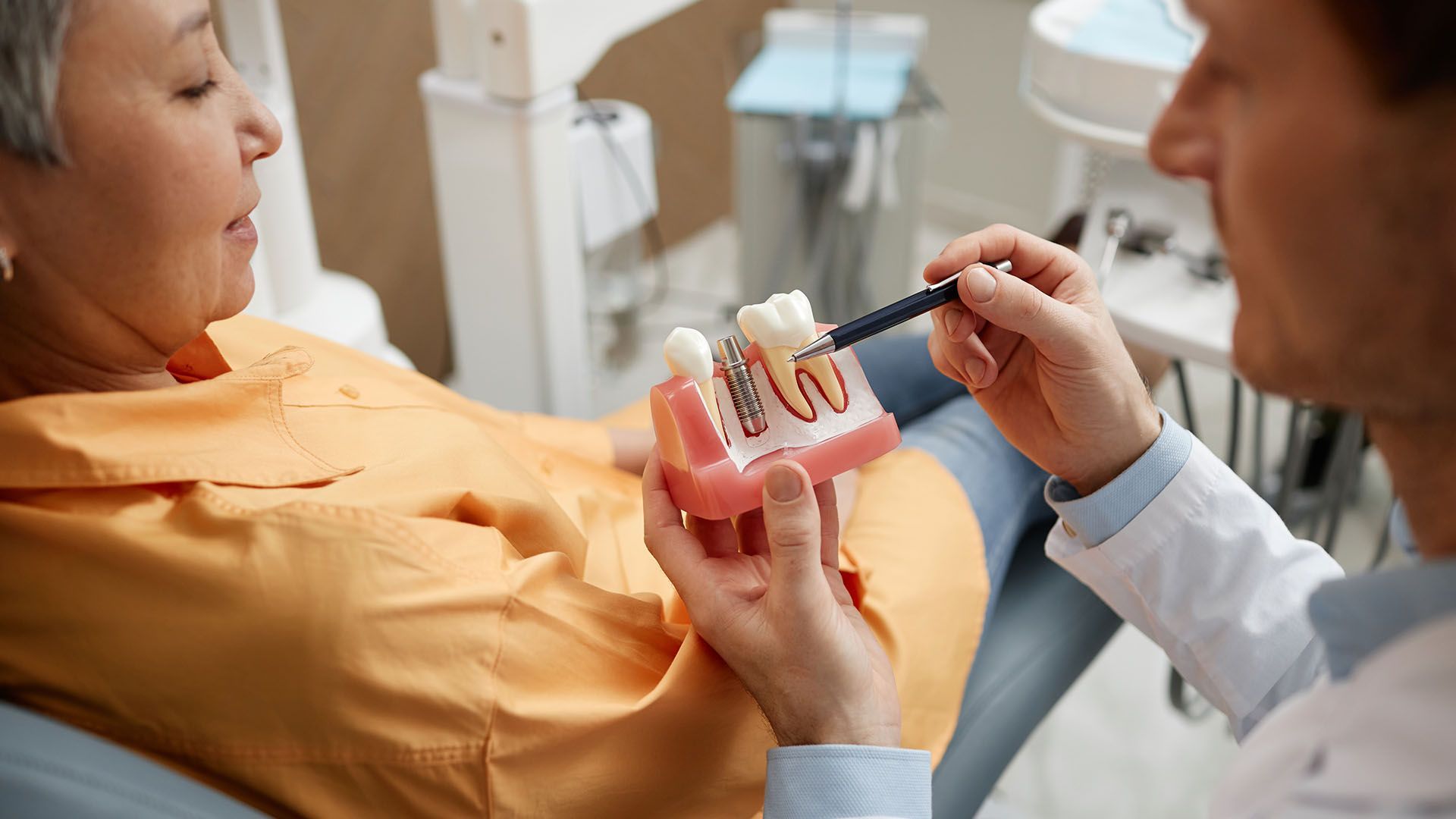
- The dentist prepares the site and places the titanium implant into the bone.
3. Stability check
- Your dentist measures how firmly the implant sits in the bone.
- If it meets the guidelines for immediate loading, they proceed with a temporary tooth.
4. Provisional crown, bridge, or denture
- A temporary crown for a single tooth,
- Or a temporary bridge or implant-supported denture if several teeth or a full arch are being replaced.
This is how same day tooth replacement and instant dental restoration are possible, you don't leave with a gap.
Immediate post-operative care and what happens in the first hours
Right after surgery, you'll spend a short time in the office while the team checks your comfort and gives you instructions. Most patients can go home the same day. Expect:
- Some swelling and mild soreness for a few days.
- Advice to avoid chewing directly on the new implant site.
- Instructions on medications, ice packs, and how to clean the area.
If you have a temporary bridge or full mouth dental implants, your dentist may recommend a soft diet for a period of time so the implants are not overloaded while healing. Learn more about how long dental implants hurt.
Recovery, Aftercare & Long-Term Maintenance
Early healing phase: what foods to eat, what to avoid
The first couple of weeks after single day dental surgery are important for healing. Most dentists suggest:
- Soft foods like yogurt, eggs, mashed potatoes, and smoothies.
- Avoiding very hot, crunchy, or sticky foods.
- Not chewing directly on the new implant area until your dentist says it's okay.
Following these directions can help protect your implants during the early dental implant recovery phase. If you're wondering about specific beverages, check out our guide on whether you can drink iced coffee after dental implant surgery.
Follow-up visits and what to monitor
You'll return for several checkups so your dentist can:
- Monitor the gums and surrounding bone.
- Make adjustments to your temporary teeth if needed.
- Plan the timing of your final crowns, bridges, or implant-supported teeth.
Call your dentist if you notice unusual pain, swelling that worsens after a few days, or any loosening of the temporary tooth. For urgent concerns, contact us about dental emergencies.
Long-term success: habits and hygiene that support implant longevity
Dental implants are designed to be a permanent tooth replacement, but their lifespan depends on how well they are cared for. To protect your investment:
- Brush twice daily and clean between teeth with floss or interdental brushes.
- See your hygienist regularly for professional cleanings through our
preventative dentistry program.
- Avoid smoking or vaping, which can damage the bone and gums around implants.
- Wear a nightguard if you grind your teeth.
Good habits help implants last and keep fast dental implants from becoming short-term fixes.
Benefits and Limitations You Should Know
Major advantages (fewer appointments, immediate smile, less downtime)
For the right same day dental implants Main Line candidate, benefits can include:
- Fewer total appointments.
- No period of living with a gap in your smile.
- Better comfort compared with removable dentures.
- A more stable bite while the bone heals.
For people who need to look their best for work or social events, these advantages can be life-changing.
Important limitations and risks (higher technical demands, bone loss risk, increased chair time)
Same day implants are not perfect for everyone. Some of the main limitations are:
- Higher technical demands. The procedure requires careful planning and precise surgical technique.
- Not suitable for all bone types. Thin or soft bone may not hold an implant securely enough for immediate loading.
- Possible need to modify the plan mid-treatment. If the implant isn't stable enough, your dentist may decide not to attach a temporary tooth that day.
- Longer procedure day. Combining tooth extraction, implant placement, and temporary restoration can mean more time in the chair at once.
Understanding the pros and cons of same day dental implants Main Line patients face helps you make a decision that fits your health and your lifestyle. Some patients may want to explore the benefits of dentures over implants depending on their situation.
How to weigh the decision: is it right for you?
Ask yourself:
- Am I more concerned about the speed of treatment or the long-term result?
- Am I comfortable following specific diet and care instructions while healing?
- Do I understand that the same day tooth is usually temporary and that more steps will follow?
Your dentist can help you compare who's a candidate for same day implants Main Line versus who may do better with a more traditional implant approach or another option entirely.
Why Choose a Main Line Practice for This Treatment
Localized expertise and access to advanced technology
Seeing a same day dental implants Main Line provider keeps your care close to home. A dentist who routinely treats patients from your community understands:
- The types of cases common in the area.
- Local preferences and expectations about comfort, appearance, and schedule.
Many Main Line practices also work closely with local specialists and labs when needed, which can improve communication and results.
Convenient access and continuity of care for Main Line patients
Same day implants involve planning, surgery, healing, and long-term maintenance. Having all or most of that care in one location makes life easier. You won't need to:
- Drive long distances for multiple follow-up visits.
- Bounce between many offices that may not share your full history.
Instead, your team can follow your case from start to finish and adjust as needed.
How to evaluate a provider: credentials, approach, patient reviews
When you're choosing a dentist for implants, same day or traditional, look for:
- Clear explanations of all your options, not just the most advanced one.
- A thoughtful review of your medical history, medications, and goals.
- Realistic expectations about results and healing time.
- A supportive team that encourages questions.
Patient reviews and before-and-after photos from our smile gallery can also help you understand the dentist's style and the types of cases they treat.
Next Steps: How to Move Forward
Initial consultation: what you'll discuss and what to bring
At your first visit, be ready to talk about:
- Which teeth bother you and why.
- Your medical history and any medications or supplements.
- What you hope your smile will look and feel like.
Bringing any recent X-rays, dental records, or a list of questions can make the consultation more productive. Contact us to schedule your evaluation.
How to prepare financially and time-wise
Implants are an investment. Before starting, ask your dental team about:
- A written treatment plan with fees for each step.
- How
insurance
may help (if at all).
- Payment plans or financing options.
- The number of visits and the expected dental implant timeline from start to finish.
Knowing these details ahead of time can reduce stress and help you plan around work, family, and travel.
Questions to ask during your visit
To feel confident in your decision, consider asking:
- Am I a good candidate for same day implants, or is a traditional approach safer for me?
- What are the main risks in my specific case?
- What will my temporary teeth be like?
- How will we know the implants have healed well?
A dentist who takes time to answer these questions clearly is more likely to be a good fit for your care. Check out our FAQ page for more common questions.
If you're living on the Main Line and wondering whether same day dental implants are right for you, the next best step is a thoughtful, in-person exam. A personalized evaluation can confirm if you're a strong candidate, outline other options, and give you a clear picture of costs and timeline. Reaching out for a consultation is not a commitment to treatment, it's simply a chance to get expert guidance on the best way to restore your smile and protect your oral health for the long term.
Learn more about our restorative dentistry services or meet our team today.
Frequently Asked Questions About Same-Day Dental Implants
Can same-day dental implants fail, and what are the warning signs?
While same-day implants have high success rates, they can fail if the bone doesn't integrate properly with the implant or if infection develops. Warning signs include persistent pain that worsens after the first week, increasing swelling or redness, implant mobility, or pus around the surgical site. The first three months are most critical for bone integration. If you notice any of these symptoms, contact your dentist immediately rather than waiting for your scheduled follow-up.
How much do same-day dental implants typically cost compared to traditional implants?
Same-day implants often cost slightly more than traditional implants due to the additional planning, specialized equipment, and longer procedure time required. A single same-day implant typically ranges from $3,000 to $6,000, while traditional implants may cost $2,500 to $5,000. However, same-day implants can actually save money long-term by reducing the number of appointments, temporary prosthetics, and time off work. Insurance coverage varies significantly, so ask for a detailed treatment plan and verify what your specific plan covers before proceeding.
If my dentist says I'm not a candidate for same-day implants, does that mean I can't get implants at all?
Not at all. Being unsuitable for same-day implants simply means your case requires a more careful, staged approach. This is actually common and doesn't reflect poorly on your oral health. You may need bone grafting first, a longer healing period, or traditional two-stage implants where the implant heals before the tooth is attached. Many patients who aren't candidates for immediate loading go on to have very successful traditional implants. The goal is always the best long-term outcome, not the fastest treatment.
What's the real difference between the temporary and permanent teeth, can I tell?
The temporary tooth placed on the same day is functional and looks natural, but it's made from less durable materials like composite resin or temporary acrylic. You'll need to be gentler with it, avoiding hard foods and not using it for heavy chewing. The permanent crown, placed after healing is complete (usually 3-6 months later), is made from stronger materials like porcelain or zirconia that match your natural teeth more closely in color, translucency, and strength. Most people can't visibly tell the difference between a well-made permanent implant crown and a natural tooth.
How long before I can eat normally after getting same-day implants?
This depends on how many implants you received and where they're located. For a single front tooth, many patients can carefully eat soft foods on the opposite side within 24-48 hours. For multiple implants or full-arch replacements, your dentist will likely recommend a soft diet for 6-12 weeks while the bone integrates. "Eating normally", including tough meats, raw vegetables, and crunchy foods, typically happens after your permanent teeth are placed and your dentist confirms the implants are fully healed, usually around the 4-6 month mark. Following these restrictions is critical for implant success.